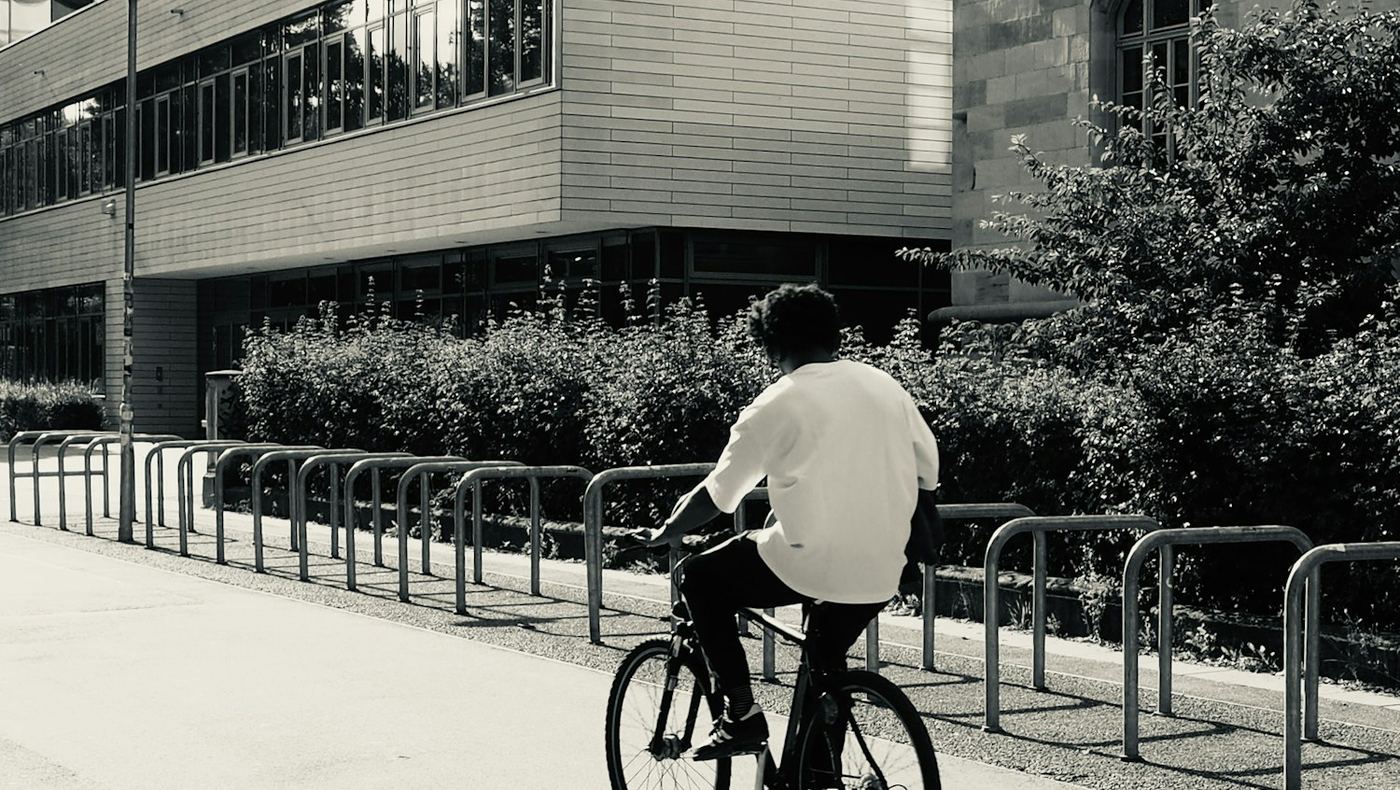
Biking or walking to campus
Use this if you live within a few miles of campus and want to cut what you spend on getting there. Biking and walking cost little week to week, and a few purchases and campus services keep them working in bad weather and after dark.
What a bike costs to start
A used bike in good working order covers most commutes, and some campuses sell or auction abandoned bikes collected by campus police. Plan for a sturdy lock, front and rear lights and a helmet along with the bike itself, since those are what keep it in use. Many states and cities require a front light when you ride after dark.
Register the bike with campus police or the parking office if your college runs a registration program. Registration records the serial number, which makes a stolen bike easier to identify and return.
Keeping a bike running
Flat tires, worn brake pads and a loose chain are the usual repairs. Many campuses have self-service repair stands with tools and an air pump, and some run a student bike shop or a workshop that teaches basic repairs. Ask the transportation office or the recreation center where the nearest one is.
Some cities and colleges also run bike share systems with student memberships, which spare you the lock, the storage and the repairs. Compare a term's membership with what owning and maintaining a bike would take, and check whether docks sit near your classes.
Walking and the weather
Walking costs the least, and most of the spending goes into shoes and clothing that handle rain, heat or snow. A waterproof bag keeps a laptop and notebooks dry. In cold climates, plan a backup for icy weeks, such as a bus route or a campus shuttle, so a storm does not mean a missed exam.
Time is part of the cost as well. A walk that takes 40 minutes each way uses more than six hours a week, which is time taken from study or paid work. Weigh that against a bus or a bike before you settle on walking every day.
Getting home after dark
Many campuses run evening safety escorts or late-night rides for students heading home alone, usually through campus police or public safety. Save the number in your phone at the start of the term instead of looking it up at night. Walk lit routes where you can, and tell someone your plan if a lab or shift ends late.
Lights on the front and back of a bike, reflective strips on a bag and light-colored clothing make you easier to see on dark streets. Recharge lights or replace their batteries when the days get shorter in the fall, since a dim light is easy to overlook until you need it.
Save the number in your phone at the start of the term instead of looking it up at night.
What you can do this week
- Map a lit route from home to your main classes
- Find the nearest bike repair stand on campus
- Register your bike with campus police or parking
- Save the campus safety escort number in your phone
Who to ask
The campus transportation office and campus public safety
Worth remembering : A good lock, lights and a backup plan for bad weather and late nights keep a low-cost commute reliable.