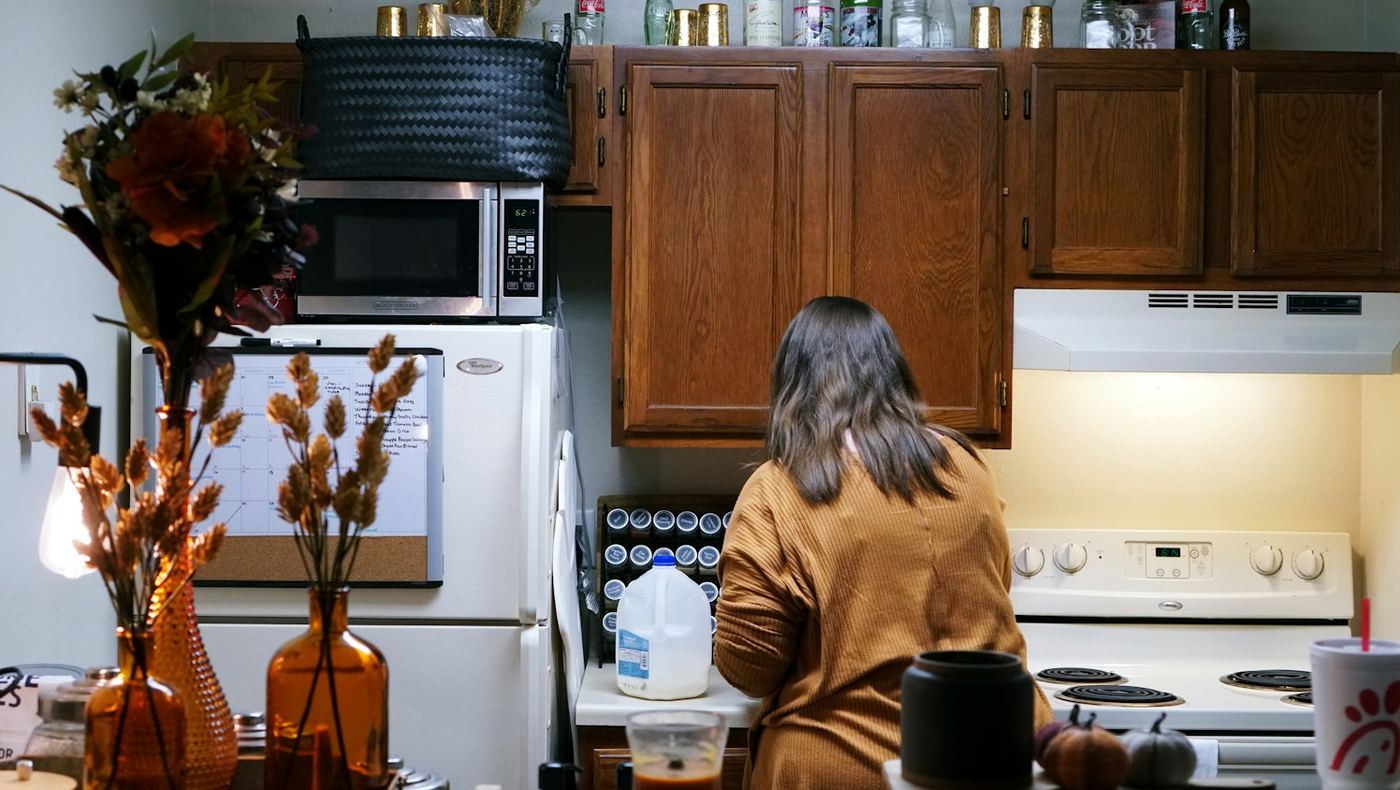
Cooking for yourself in a shared kitchen
This is for students cooking in a kitchen they share, in a residence hall, a campus apartment or a rented house. It covers what the housing rules allow, how to store food so it lasts, and how to cook in batches so a few hours of work feed you for days.
What your housing allows
Residence halls usually set rules about cooking, such as which floors have kitchens, which appliances you may keep in your room, and whether hot plates, toaster ovens or rice cookers are allowed. The housing handbook lists them, and a resident assistant can explain anything unclear. Breaking the appliance rules can lead to a fine or a fire safety violation.
In a campus apartment or a rented house, the lease and your roommates set the terms. Agree early on who buys shared items such as oil, salt and dish soap, and how the kitchen gets cleaned each week.
Storing food in a shared space
Label your food with your name and the date, and keep dry goods in a closed bin or on a shelf in your room if the kitchen is crowded. A small fridge in your room, where housing allows one, keeps your milk and leftovers apart from everyone else's. Freezer space is often the scarcest part of a shared kitchen, so ask roommates how to divide it.
Put cooked food in the fridge within two hours, as federal food safety guidance advises, and eat leftovers within three to four days. Food left on a counter in a busy kitchen can spoil before anyone notices.
Freezer space is often the scarcest part of a shared kitchen, so ask roommates how to divide it.
Cooking ahead to stretch groceries
Cooking a pot of rice, beans, soup or pasta sauce once or twice a week saves time on class days and cuts the number of meals you buy on campus. Divide it into containers right away and freeze some for the end of the week. Low-cost staples such as oats, lentils, eggs, frozen vegetables and canned fish keep well and cook quickly.
Some students share cooking with a friend or roommate, each making a large dish and trading half. The trade works when you agree on portions and food needs before the first swap.

Where to find equipment and help
Many basic needs centers lend or give away pots, pans and utensils, and some hold cooking classes or post simple recipes built from pantry food. Residence life staff sometimes keep a kitchen kit you can borrow for an evening. The campus dietitian, often based in dining services or the health center, can help you plan meals around a medical diet.
What you can do this week
- Read the appliance rules in the housing handbook
- Label and date the food you keep in the kitchen
- Cook one large batch and freeze part of it
- Ask the basic needs center about borrowing cookware
Who to ask
The housing office, your resident assistant and the basic needs center
Worth remembering : A shared kitchen feeds you for less when you know the house rules, label your food and cook in batches.